The genus Weinmannia was established by Linnaeus in 1759 1 when he named a new plant from a Caribbean island, Weinmannia pinnata. He named the genus after the German pharmacist and botanist, Johann Wilhelm Weinmann (1683-1741) who wrote Phytanthoza Iconographia which was highly regarded for the information and the quality of the 1,025 coloured illustrations. The genus was subsequently placed in a new family, Cunoniaceae, which was established by Robert Brown in 18052.
Most of the new genus and indeed most of the whole family are primarily to be found in tropical and subtropical regions of the world, and thus not widely grown in temperate climates. Only one genus in the family, Eucryphia, is generally regarded as reasonably hardy and widely grown in temperate regions. The distribution of Weinmannia and indeed the other genera in the family is widely considered to relate to Gondwanaland, and hence the evolution of the family has it origins in the Jurassic period, almost certainly before it split from South America3.
The first reasonably hardy species in the genus to be published was Weinmannia racemosa, from the temperate climate in the south island of New Zealand. It was named by the son of Linnaeus in Supplimentum Planatarum, published in 1782, from a herbarium specimen collected on the newly promoted Commander Cook’s second voyage around the world during which he revisited New Zealand, having previously circumnavigated and mapped it on his first voyage. The two botanists on this trip were the Prussian naturalists Johann Rheinhold Forster and his son Johann Georg Forster. It must have been the son who contacted Linaeus fil. regarding the identity of this new tree, as he subsequently published it in his Prodomus in 1786. Father and son had jointly published some of the collections of the trip in Characteres Generum Plantarum in 1775-6.
However, another species had been previously collected from the north island of New Zealand by Joseph Banks and Daniel Solander, the assistant he employed, who acted as botanists on Lieutenant Cook’s first voyage around the world. The herbarium specimen which they collected in 1769 was described in an unpublished manuscript in Bank’s library, by Daniel Solander. Solander was a capable Swedish botanist and student of Linnaeus. He died at the early age of 49 of a brain hemorrhage in 1782, whilst still in the employ of Banks as secretary and librarian. For the last 10 years of his life he was also employed as Keeper of the Natural History Department of the British Museum. Solander’s name and description of the new plant, Weinmannia silvicola, was eventually published by Alan Cunningham in 18394 along with other plants which the latter collected in the North Island of New Zealand in 1926.
The hardy species Weinmannia trichosperma was first described and published the Spanish botanist Antonio Cavanilles in 18015. Whilst he gave no indication of who collected the new plant Luciano Barnardi indicates that the herbarium specimen was collected by Joseph Dombey, who accompanied Ruiz & Pavon on their expedition to Chile and Peru6. (The politics and convoluted circumstances of that expedition are briefly described by Alice Coates7 and in a more understated scholarly way by F.A. Stafleu8.) Apparently unaware that Cavanilles had described and published the plant, based on the Dombey herbarium specimen, Ruiz & Pavon published the same plant under the name Weinmannia dentata a year later9.
The earliest record of any species of Weinmannia growing in the British Isles was W. racemosa in ‘A list of plants hardy in the Gardens at Castlewellan in 1903’10 in the sheltered arboretum created by the Earl of Annesley, in the south of County Down. However, it was not included in the paper he gave to the RHS in July 190211 which was an overview of many of the fairly mature ornamental trees and shrubs growing there, but was by no means a comprehensive coverage. How long it survived is not known, but it was certainly not listed in a small catalogue of plants in the garden published in the 1970s.
The next published record of Weinmannia was the result of ‘Meeting of the RHS Scientific Committee on 11th April 1917’, chaired by E A Bowles, which decided to conduct a survey of how many plants in the British Isles had fared after the previous very severe winter. The results were published in 191812. Only two of the many gardens contacted and responded grew Weinmannia. W. racemosa was unaffected at Rostrevor House, at the south-eastern extremity of County Down; the sheltered garden and very significant plant collection of Sir John Ross of Bladensburg, which was well known to leading botanists and plantsmen of the day. W. silvicola was recorded as been killed to the ground at Glasnevin Botanic garden in Dublin. Whether it recovered is not known. However, Glasnevin may have had the foresight to pass a duplicate of this tender plant to Tresco in 1914, where it was recorded as still growing at Monument Walk in 198513.
It was 1921 before there was any published reference to Weinmannia trichosperma being in cultivation. It was contained in a substantial list of South American plants introduced into cultivation, compiled by W.B.Turrill MSc, at the request of Mr W.G. E. Loder MA, F.L.S. F.R.H.S, but without giving any details were the plants were being grown or by whom14. It was probably compiled as an intended acquisition list for Mr Loder, who was an avid collector of plants. Six year later W. trichosperma gained an AM when a flowering branch was put up for award at the RHS by Mr G.W.Loder Esq., the year before he became president of the RHS15.
In 1930, Edgar Thurston recorded W. trichosperma as growing at Lugdvan rectory and in the temperate house at Kew, but without further details. 16 Curiously he did not mention it growing at Lanarth. The year before, Frank Kingdon Ward, writing about a visit to Canon Arthur Boscawen’s garden at Lugdan rectory in the summer of 1927, extolled the virtues of late flowering trees and shrubs from Australasia, and New Zealand in particular, but almost dismissively noted W. silvicola and W. trichosperma as being other interesting plants17.
The first published record of a substantial tree of W. trichosperma is of one being 20ft (6.1 m) high in 1931 at the garden of P.D. Williams at Lanarth, albeit published only a decade later18. The origin of these early introductions does not seem to be known, but the tree at Lanarth, judging from its height, may have represented the first introduction of the plant into cultivation, prior to 1920. As Bishop Hunkin recorded in and article on Lanarth, P.D. Williams received plants from a wide circle of leading gardeners and plantsmen. The plant could well have come from Canon Arthur Boscawen. Curiously, Arnold-Forster only mentions W. trichosperma in the final chapter, Uncommon, untried or tender shrubs, with a brief description and rather dismissively refers to the New Zealand trees as ‘other species, less attractive’19.
The first record of Weinmannia being collected in the wild is by Harold Comber, on the second of his two Andes Expeditions in 1925-6 and 1926-7. He collected the seed (No.1060) at 3000ft (915m) on the Argentinean side of the border beside Lago (lake) Lolog, with an XX rating, XXX being the most garden worthy, and no rating the least garden worthy. The accompanying note reads: ‘Here only a narrow belt by the water’s edge, 12’-25’high, but with big trunks. Slow growing and stunted, but shows no sign of being frozen. Should be hardy. Germinated’20. The introductory note accompanying the collection data, written by Henry D. McLaren, notes that the seeds were identified by Kew from herbarium specimens of the plants collected, and that both RBG E and Kew were presented with a set of seeds by the Subscribers, who comprised many leading affluent gardeners of the day.
Not many examples of Weinmannia seem to have survived from this introduction, and only two possible plants might be from this collection, the current Champion tree in the British Isles21 at Mount Stewart, Co Down (52ft (16m) x 12” (31cm) dia in 2003) and a potentially close rival, at Logan Botanic Garden on the Stranraer peninsula (45ft (14m) x 10” (24cm) dia. in 1979), though its tree would have been planted before RBG Edinburgh took over responsibility for it. The Mount Stewart specimen was first mentioned in print by Graham Stewart Thomas in 1950, when he saw it there growing beside the lake in full flower, at 25ft high22.
Perhaps, surprisingly Bean only mentions two specimens, though does include a line drawing of the attractive fern-like foliage23. The first, a 12ft (3.5m) high specimen, at Wakehurst Place, which must have been a replacement for the plant which Gerald Loder, later elevated to become 1st Baron Wakehurst, got the AM for. (The current specimen growing there at 16ft (5m)21 must be another replacement or else the plant has been remarkably slow growing for almost 30 years.) The second specimen mentioned by Bean was the champion tree (59 x3 ¾ ft girth in 1971) at Tregothnan in Cornwall, the estate and garden of Viscount Falmouth, which has been in the Boscawen family since 1344. That tree, now presumed lost, almost certainly came from Canon Boscawen, cousin of the then 7th Viscount, who was known to have supplied plants to the family estate.
What is surprising is that such an attractive tree as W. trichosperma is not more widely grown, despite being in cultivation in the British Isles for almost a century. The rarity of W. silvicola is not so difficult to explain as it comes from the north island of New Zealand. It is probably only on Tresco that it would survive for any length of time as it requires very mild temperate conditions. W. racemosa, again barely in cultivation, is certainly hardier, and it is puzzling as to why no examples of it were identified in cultivation in the recent survey by Owen Johnson21.
It must be admitted that neither of the New Zealand species are as attractive in leaf as their South American relatives. The juvenile foliage of W. silvicola (locally called Tawhero) is pinnate but reduces to trifoliate and even simple leaves in maturity. The tiny white flowers are presented in racemes, clustered at the tips of the branches and the trees can vary in height from 20ft (6m) to 70ft (22m), and develop a trunk up to 3ft (90cm) in diameter24.
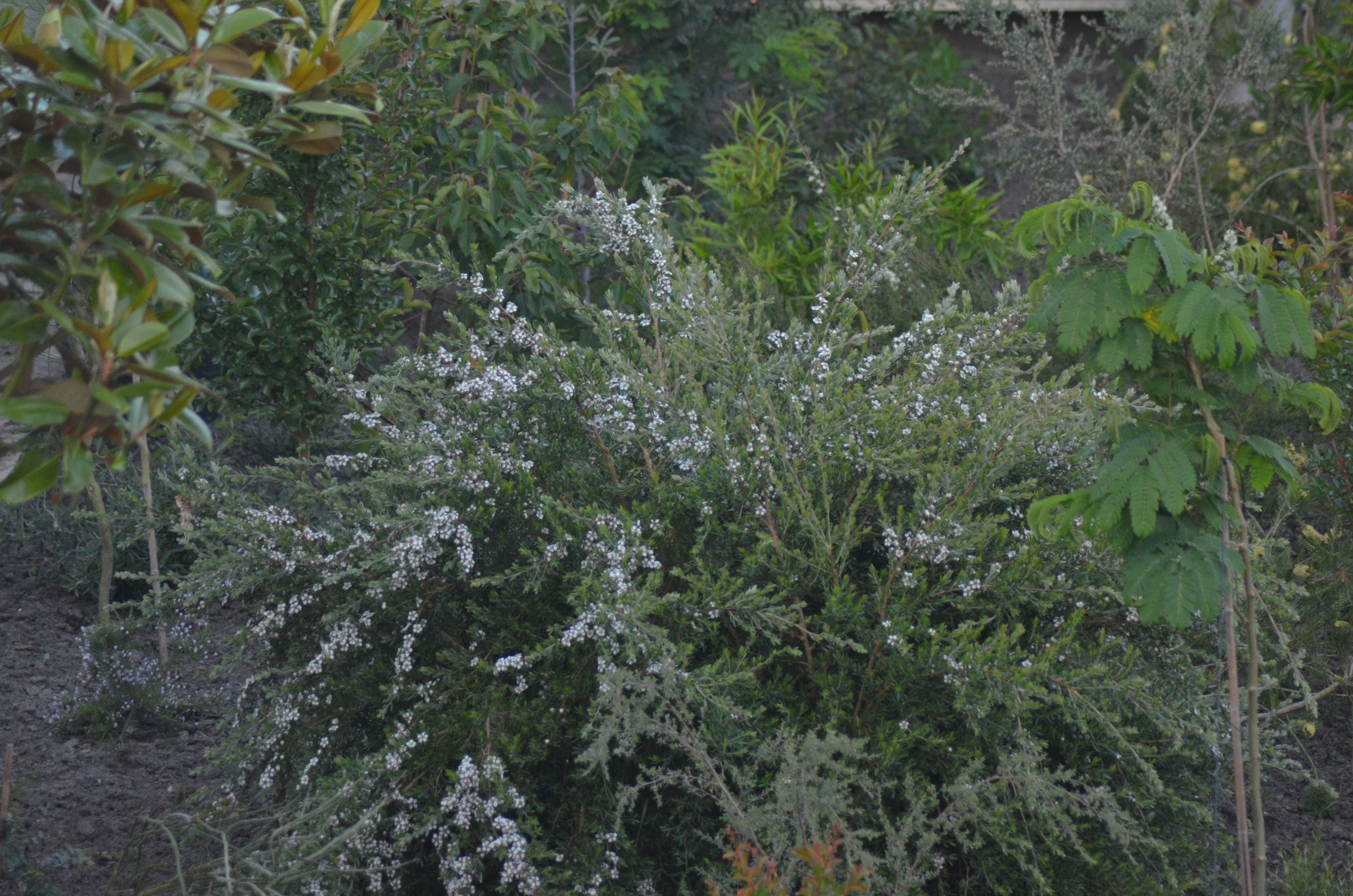
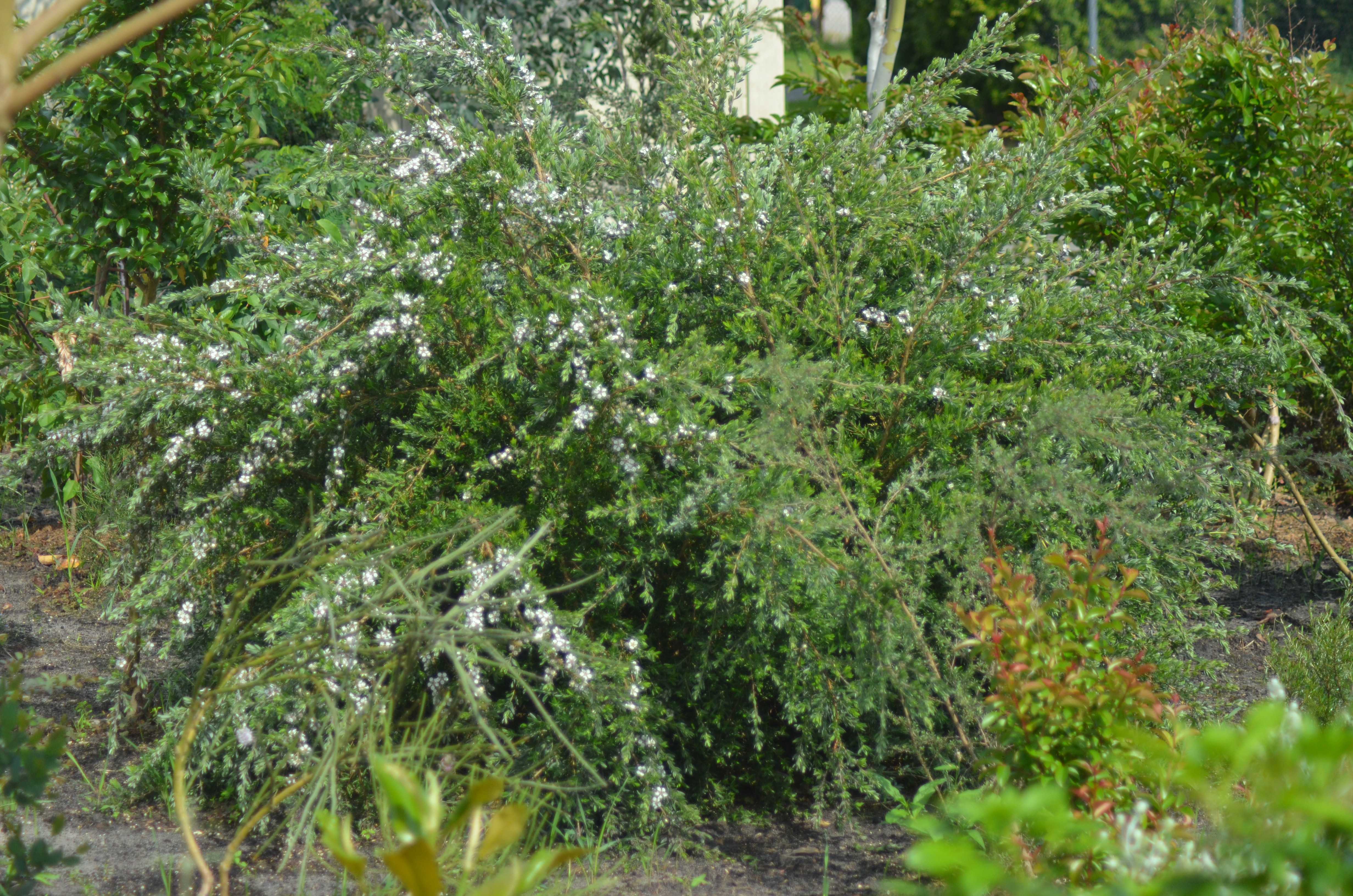
The juvenile foliage of W. racemosa (locally called Kamahi) is simple or trifoliate, becoming simple in mature trees (photos pages 20and 21), which can reach a height of 90-100ft (28-30m) with a trunk up to 4ft (1.2m) in diameter. The slightly larger flowers are presented in longer racemes, but with fewer clustered at the tips of the branches24. The flowers of both trees are illustrated in several books on native plants or flora of New Zealand25 as well as being easily found on various websites.
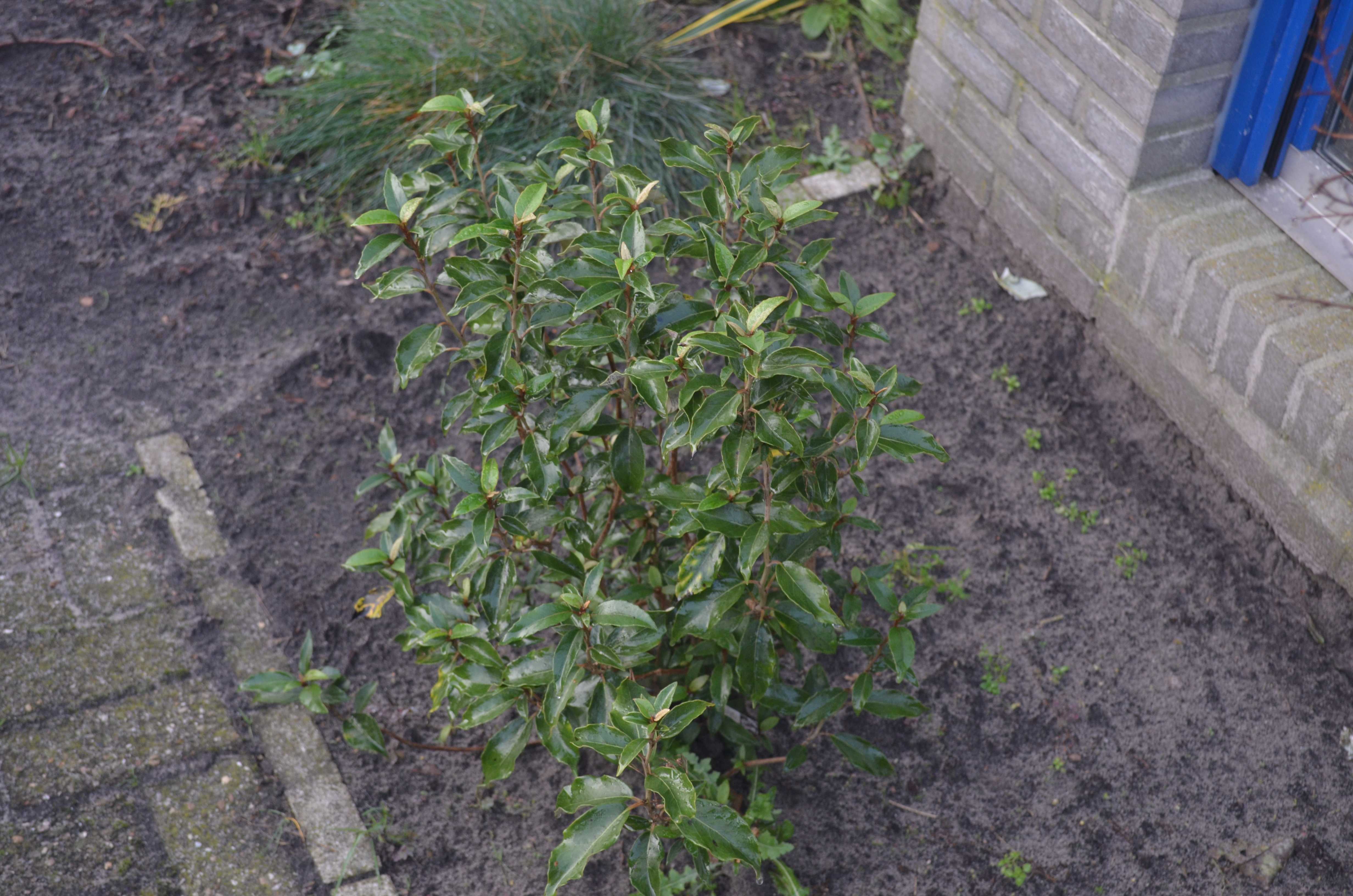
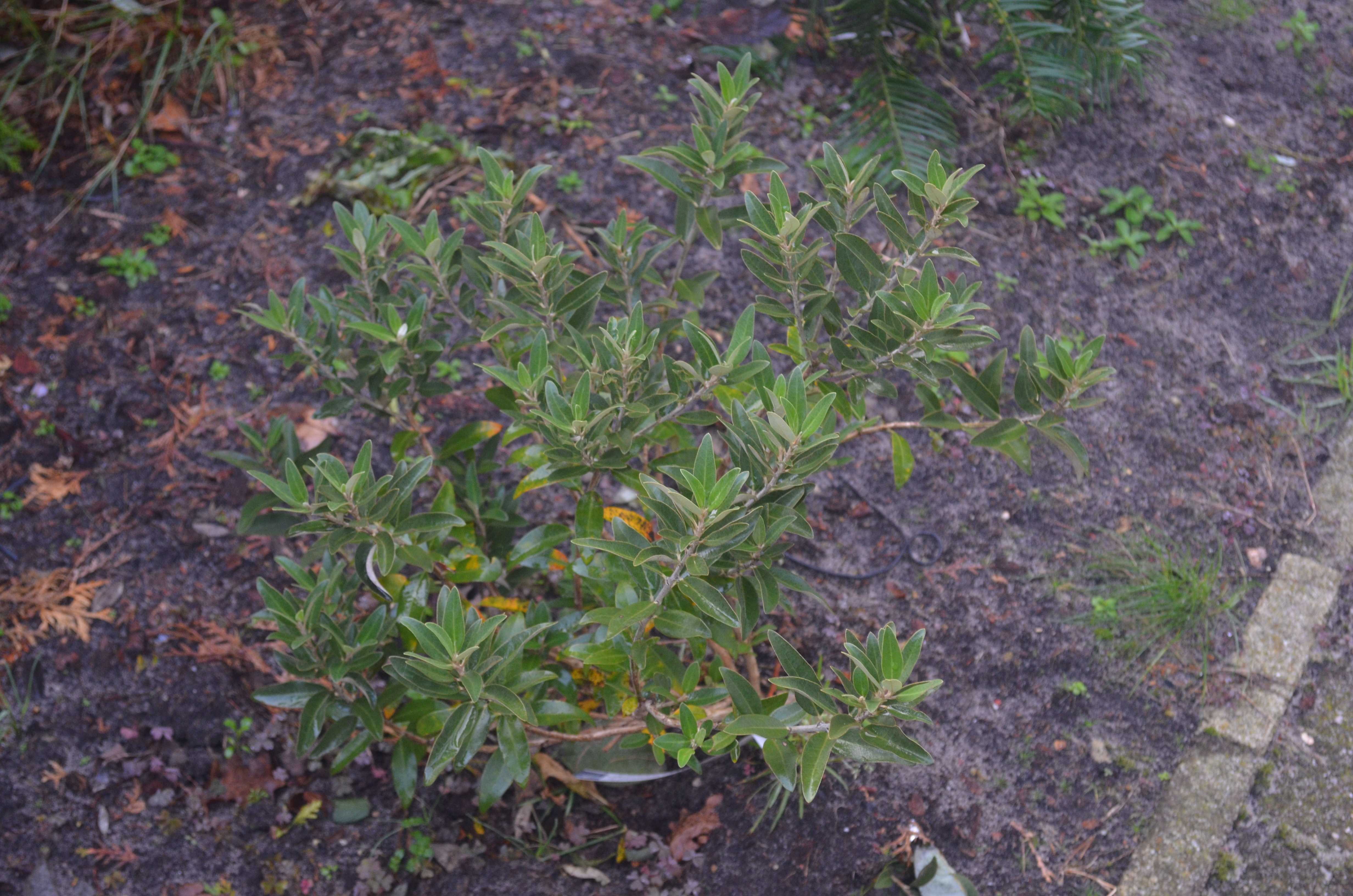
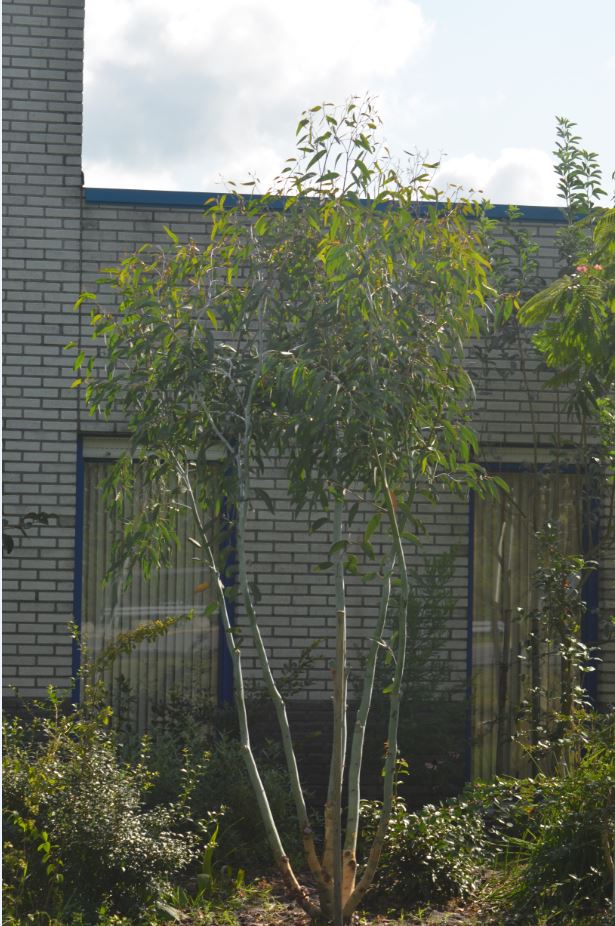
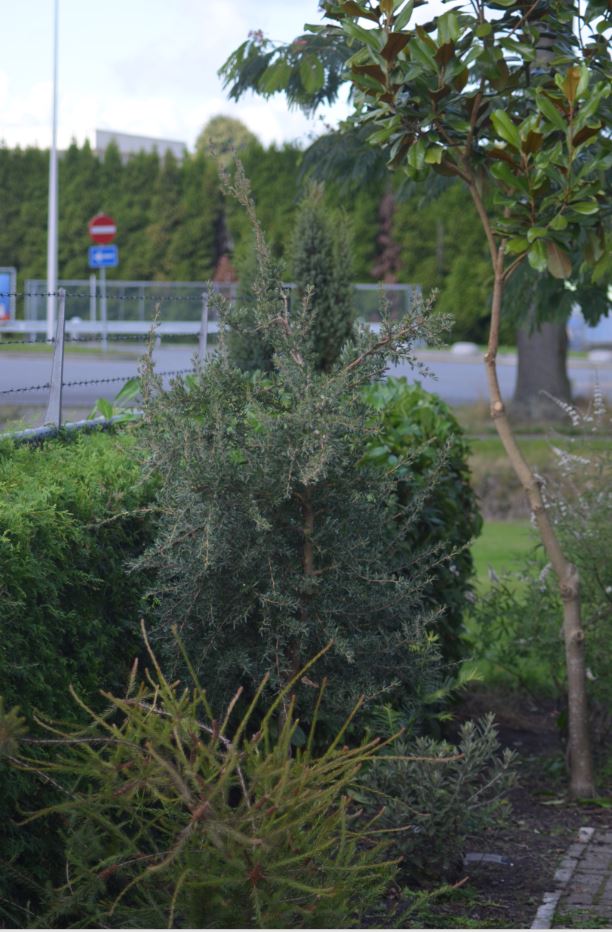
I have not been tempted to try growing W. silvicola for obvious reasons, but have grown W. racemosa for about 10 years. A small seedling about 8in (20cm) tall was planted out in rather dry, poor and fairly shallow soil over dolerite bedrock. It proved to be rather slow growing, which is perhaps not surprising given the conditions in which it was planted. However, it has survived and established itself, despite competition from several large eucalyptus species, which, I learnt rather too late, tended to reduce soil fertility. That should have been obvious, as eucalyptus leaves do not rot down easily. In the last couple of years the rate of growth has increased and, aided with a top dressing of horse manure last year, growth rate improved a little and the small tree has now reached 8ft (2.4m) high (photo page 21). How long it will take before starting to flower remains to be seen.
In contrast to the New Zealand tree, W. trichosperma (locally called Teniu, Maden or Medehue) does not have a different form of juvenile foliage. The small white flowers are similarly presented in short racemes, either singly in pairs or in groups of 3-4, though not at the tips of the branches; they normally occur either side of new leaf growth (photo page 22). Again it can reach 100ft (30m) tall, but so far rather less in cultivation. In Chile it occurs in two almost disjunct linear areas either side of the highest ranges of the Andes, approximately from almost 37o to 45 o south26 (regions VII to XII). Plants from the coastal habitat including Chiloe island and further south on the mainland are likely to be less hardy as those growing at higher elevation inland along the border with Argentina.
The tree that I grow is now about 15 years or so old, and has reached about 20ft (6m) high, It is in slightly deeper and moister soil than its New Zealand cousin, though not necessarily more fertile. It is a seedling from the Mount Stewart plant, but unfortunately there is no specific reference in the sporadic garden notes to identify its provenance or date of acquisition. The Mount Stewart tree grows in a relatively open position beside the path close to the lake, and forms a neat narrow tapering spire, but unfortunately it is not possible to get a good photograph of it, without being able to walk on water. However the small pinnate leaves really need close inspection to appreciate their intricacy. When flowering well, the flowers can give the impression of the tree being well dressed with a mass of short white candles, albeit rather drunkenly arrayed. The new foliage (photo page 22) makes a colourful contrast to the dark glossy green mature foliage and is echoed later by the seeds turning red, before ripening to brown. Its normal flowering period is in May, though in 2010 for the second time it has produced a second crop of a few flowers, in October and into November, though not so many as in 2008 when it previously provided an autumn flush of flowers, but without detracting from the display the following spring.
Whilst W. trichosperma is not especially showy it has an understated elegance which ensures that it should be more widely grown. It is not wide spreading so does not need a lot of space and could readily be planted instead of some conifers or other evergreen trees. However, it is only suitable for growing in the more westerly areas of the British Isles, where reasonable rainfall, and relatively high humidity usually prevail. It is probably best planted in moisture retentive soil, and can tolerate light shade. It can be raised quite easily from the fine seed which is best almost surface sown in close conditions to maintain a high humidity. Care should be taken to prick out the seedlings when still quite small and to pot in into relatively heavy potting mix to ensure the roots are not disturbed when potting on or planting out in its permanent position. Root disturbance of relatively small plants can prove fatal.
Author: Gary Dunlop
Published: Issue 46 (May 2011)
1. Linnaeus, C. 1759: ed .10 Systema Naturae p.1005
2. Brown, R. 1810: Prodomus Florae Novsae Hollandiae 1802-5
3. Bradford J.C. 1998: A Cladistic analysis of species groups in Weinmannia (Cunoniaceae) based on morphology and inflorescence architecture p. 582 Vol.85 pp.565-593 Annals of Missouri Botanic Garden
4. Cunningham, A. 1839: W.sylvicola (Sol.) Annals of Natural History Vol.2 (11) p357
5. Cavanilles, A 1801: Icons et descriptions Plantarum Vol. 6 p.45 tab.567
6. Barnardi, L. 1961: Revisio generis Weinmanniae. Pars I: Sectio Weinmanniae. Candollea. 17: 123-189.
7. Coates, A. 1969: The Quest for Plants. pp.363-8 Studio Vista, London
8. Stafleu, F.A. 1963: L’Hertier de Brutelle: The man and his work pp.xx-xxiv in Lawrence, G.H.M. 1963 ed. Sertum Anglicum 1788 Facsimilie with critical studies and a translation. Hunt Botanical Library, Pittsburgh.
9. Ruiz & Pavon 1802: Flora Peruviana et Chilensis Vol.4 . tab. 334
10. Annesley, Lord 1903: ‘A list of Plants Hardy in the Garden at Castlewellan, Co Down. Privately published
11. Annesley, Lord 1902: On ornamental trees and shrubs in the garden at Castlewellan Co Down Ireland. RHS J Vol. 27 pp 407-27.
12. Bowles, E.A. 1918: The effect of the frosts of the Winter of 1916-17 on Vegetation. RHS J Vol 43 pp.388-461.
13. King, R. 1985: Tresco England’s Island of Flowers. P.160 Constable London
14. Turrill, W B 1921: Plants introduced to horticulture from Chile and Argenntina (including Patagonia and Fuegia). RHSJ Vol.46 pp.346-50.
15. Floral committee 1928: AM to Weinmannia trichospermum (12 votes for) [out of 26 members present at Chelsea May 24th 1927] from G.W.E.Loder Esq. Ardingly. A tender shrub bearing fern- like leaves and terminal racemes of small white flowers. RHSJ Vol.53 p.lviii
16. Thurston,E. 1930: Trees & Shrubs in Cornwall. Cambridge University Press for the Royal Institution of Cornwall.
17. Kingdon Ward, F. 1928: Ludgvan rectory. Gardeners’ Chrionicle March 9th 1929 pp 183-4.
18. Hunkin, Rt Rev J W 1945: The Making of Lanarth RHSJ Vol 70 p.108 (pp.63-72, 104-10 & 132-5.)
19. Arnold-Forster,W.1948: Shrubs for Milder Counties. p.348 Country Life, London
20. Comber, H.F. 1927: Field Notes of Plants collected by H.F.Comber. Andes Expeditions 1925-6 and 1926-7. Privately published.
21. Johnson, O. 2007: Half Hardy trees in Britain and Ireland. Only produced in electronic form on CD, available from the Author and a copy at the Lindley Library. See also The Plantsman 2008 Vol.
22. Thomas, G.S. 1950: Some Famous Irish gardens Pt.1 pp.236-251 RHSJ Vol.75
23. Bean, W.J. 1980: Trees and Shrubs hardy in the British Isles. Vol.4 8th revised edition. John Murray London.
24. Kirk, T. 1899: The Forest Flora of New Zealand. pp131-2 & Plate 72. & pp.133-4 & Plate 73. Government press, Wellington.
25. Cave,Y, & Paddison, V. :Encyclopaedia of native New Zealand Plants. p.49. Random House, Auckland.
26. Zegers, C.D. 2005: Arboles Nativos de Chile [Chilean Trees] pp.60-1. (Bi-lingual text) Marisa Cunero Ediciones Valdiva.